Sunday, March 24, 2013

カタカナ Literary Work (Final)

はいく 一
先週森
木をとても切る
コンシュウトシ


はいく 二
春にがま
「ケロケロ」話す
水に飛ぶ


***These are the same as my drafts, except that in the second, I used the correct Japanese frog sound as pointed out in the comments below.

PE1 Reflection and PE2 Goals

Reflection:
In this PE, I was hoping to increase the fluency of my speech by decreasing the frequency and length of pauses I take to think of the correct word/conjugation. I also wanted to improve my speed, pitch and rhythm. しばた先生's comments told me that my pitch was actually my biggest problem, so I worked to improve that. To that end, I did a bunch of shadowing and really tried to copy the pitches I heard exactly. I think I did pretty well with that, but I still need to work on producing the correct pitches when I'm free speaking and don't have a guide.

Goal:
For the next PE, I'm going to continue working on pitch. To ensure that I know the correct pitches of all new vocab, I'm going to listen to the recordings provided on the textbook CD and hopefully go back and listen to previous chapters' recordings as well. To practice, at least one of my PE recordings will be free speaking.

Activities:

  • Listen to textbook CD recording of vocab words
  • Attend しばた先生's office hours at least once, but maybe more
  • Shadow 15 minutes every other week in addition to PE requirements
  • Practice free speaking at least once every other week

Sunday, March 10, 2013

Katakana Analysis Final

I've learned quite a bit from all of our discussion of katakana over the past few weeks. I learned some in class, some from comments on my blog, and some from reading other students' blogs. Here's a summary:

First and foremost, katakana can be used in a huge number of settings. Obviously it is used for loanwords and in advertisements, but it can also be used in things like anime for onomatopoeia. Furthermore, it is often used in scientific contexts; many elements from the periodic table and names of species are written in katakana.

Often, then more important question is not where katakana is used, but rather how and why it is used. What is the creator of the work trying to convey by using katakana instead of hiragana or kanji? This brings me back to my original katakana examples.


There seemed to be a consensus in the comments that katakana is used here both because katakana is often used in advertisements and because of katakana's association with Western culture, of which this movie is an example. Something that several commenters noticed that I neglected to mention is the fact that 'Mr.' is written in romaji, with the katakana equivalent written in small letters above it. This seems to provide an even stronger connection to the Western world.


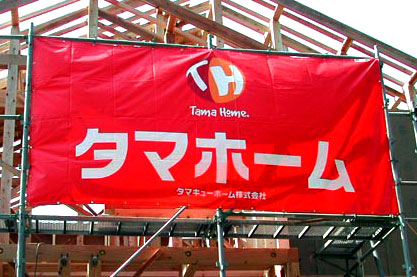
It was brought to my attention that the 'タマ' in this advertisement is not in fact a reference to the region of Tokyo, but rather part of the name of the founder, Mr. Tamaki. This is clearly a Japanese-origin name and therefore could be written in either hiragana or kanji. However, I think it's written in katakana to make the company name more aesthetically pleasing (keeping one script rather than mixing several) and to emphasize the modernity of the company:
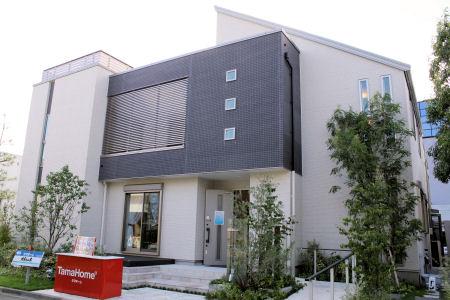
A house built by タマホーム

Overall, I think katakana is used so frequently in advertisements because it draws the reader's attention. It's different and can be used in much the same way that italics are often used in English advertisements. In other contexts, such as for onomatopoeia, it is used to convey sounds which don't technically comprise words so that readers won't try to read it as a real word.

One interesting point that I read on someone's blog is that sometimes katakana loan words are abbreviated when translated into Japanese to the point that speakers of the language from which the words came cannot recognize them. For example, 'air conditioner' in Japanese is エアコン, but no English speaker would recognize the word 'eicon.'

Tuesday, February 12, 2013

Katakana Analysis Draft


タマホーム - TamaHome
This was an advertisement for a construction/real estate company. The "ホーム" part is clearly a loanword, but Tama is a section of Tokyo and would normally be written in kanji (多摩市). I think it's written in カタカナ not only to make the company's whole name カタカナ (rather than a mix) and also to highlight the company's modernity/edginess. Their site shows homes which are all of a very modern and bold style, so their choice to write their name in a nontraditional style reflects this.


インクレディブル - Incredible
This came from the ad for the Japanese version of The Incredibles, seen above. It is a loanword from English, and I think it was used here to establish a connection between the English and Japanese versions of the movie. There is a Japanese word for 'incredible,' but this emphasizes that they are the same movie.


I think textbooks explain katakana in different ways because it is such a broad topic that there isn't a "best" way to teach it. Our textbook first introduced it for its use in loanwords, which I think is a good approach because that is where a beginner will see katakana most often. Words like アメリカ and コーヒー are very good words to know when beginning Japanese, whereas onomatopoeia is a much more complicated topic that wouldn't concern most beginners.

Monday, February 11, 2013

じゅぎょうのさいしょの週

先週の月曜日にはじゅぎょうがはじめて、すでに (=already) いそがしいです。でも、各 (かく = each) じゅぎょうが好きです。ああ、本をたくさん読みますから、ライチングセミナーがちょっと好きじゃないです。でも、そのクラスの中で友だちがたくさんありますから、きらいません。毎月曜日と毎水曜日にそのクラスの友だちとばんごはんを食べます。大好きですよ。

そして、私は日本のえいがを見るのはじめました。えいがの日本語はちょっとむずかしいですが、見るのはたのしいです。先週の週末には「となりのトトロ」を見て、とてもよかったです!つぎのえいがは、 千と千尋の神隠し (Spirited Away) を見たいです。見て、ここで書きます!

Thursday, February 7, 2013

PE 1 Goals

Goal: During this PE, I think I really want to focus on speaking fluently and not taking too many pauses to think of the right word/conjugation. I'll continue to work on speed, rhythm, and pitch as well, but I think those will come naturally as side effects of my main goal.

Activities:

  • Attend office hours with しばた先生 at least twice, but hopefully more
  • Watch at least 15 minutes of anime or 日本のえいが every week to get a feel for natural Japanese speaking
  • Shadow things not from the textbook for at least 15 minutes per week

Tuesday, January 29, 2013

PE3 Reflection


My goal for this PE was to work on the pitch of overall phrases (as opposed to individual words), which I think I did pretty well. Additionally, I was able to improve my speed a bit without losing any accuracy. I (as always) didn't quite reach my goals, but I did better than in previous PEs.

Overall PE Reflection
I think I met all of my PE goals this semester. Compared to when I first started, my speaking is vastly improved and according to しばた先生 is actually pretty good. Next semester I hope to try some different activities and practice them more to improve even faster than this semester.

Wednesday, January 9, 2013

私のふゆやすみ

私のふゆやすみはとてもよかったです。十二月十四日にうちにかえってたくさんねました。土曜日にははにプレゼントをかうので、あにとデパートにいきました.はははべーキングが大好きなので新しいキッチンウェアをかうました。私はクリスマスに本を五さつやネクタイを二本うけとりました。今年のクリスマスツリーのしゃしんをとるないでしたが、これは先年のがあります:
きれいなですね?

そして、りょうしんと「レ·ミゼラブル」をみました。とてもいいですよ!おんがくが大好きなので、えいがをもう一度みたい。

ぜんぶで、ふゆやすみはたのしかったです。たくさんねて、ゆっくりしましたが今、べんきゅします。

Wednesday, November 14, 2012

PE2 Reflection and PE3 Goals

I just realized that I started this a few days ago but never posted it. すみません!

PE2 Reflection
I made significant progress on my goal of increased fluidity, but it's still by no means easy. It doesn't help that we're continually learning new grammatical structures which I have to incorporate into my speech. By now though I think I'm pretty solid on almost everything we learned in the earlier chapters. I was not able to do all of the activities I wanted to but I did enough to have an effect.

PE3
Goals:

  • Work on pitch patterns of overall phrases.
Activities:

  • しばた先生のオフィスアワー once per week
  • Shadowing 2 x 10 minutes per week
  • Free-speaking 2 x 10 minutes per week

Monday, November 5, 2012

わたしのまち

わたしのまちはとてもちいさいです。スーパがあります。そしてコンビニがありますでもわたしはぜんぜんあそこにいません。わたしのまちでこうえんがありますそしてよくいきます。こうえんはクンケルパークといます。きれいですね?
クンケルパーク
みなさんのまちでなにがありますか?

Sunday, October 21, 2012

せんしゅうのしゅうまつ

きんようびにりょうでしゅくだいをしました。ウィルコックスでばんごはんをたべまして。しちじにポーフィールドでアルティメットフリスビーをしました。ごぜんにじはんにねました。

きのうのあさおくじにきましたそれからシヤワーをあびました。たいていあさシヤワーをあびます。あさごはをたべましたそれからフリストにいきました。フリストとてもはおおきいたてものです。

きょうのひるにアルティメットフリスビーがありました。いましゅくだいをしますそれからごぜんいちじにねます。

Sunday, October 14, 2012

PE1 Reflection and PE2 Goal

PE1 Reflection
Though I was not able to shadow nearly as often as I'd hoped, I think I met my goals. I can't speak at a native speaker's speed but now I can certainly speak much faster than I could. My pitch modulation also isn't perfect but has vastly improved.

PE2
Goals:

  • Increase fluidity of speech (less time thinking before speaking)
  • Increase ひらごな and カタカナ writing speed
Activities:

  • Practice free-speaking with other にほんごのがくせい for 15 minutes twice per week.
  • Go to office hours with しばたせんせい for 15 minutes once per week.
  • Practice transcribing textbook audio for 15 minutes once per week.

Monday, October 8, 2012

Self Introduction Video

Sorry this took so long to upload. Computers can be annoying sometimes.
じゃあ、また!

Sunday, September 23, 2012

PE #1

Goals:

  • Increase speaking speed to a more natural rate while still maintaining proper pronunciation
  • Get better at changing pitch rather than intensity
  • Improve hiragana reading speed
Activities:

  • 15 minutes of shadowing per day
  • Read hiragana texts aloud for 15 minutes per day (to improve reading speed, not for comprehension)

はじめまして!

はじめまして。テンジです。どうぞよろしく。いちねんせいです。ニュージャージーから きまして。
じゃ、また!

Monday, September 17, 2012

So, why Japanese?

When I tell my friends and family that I decided to take Japanese this year basically on a whim, they are surprised, and rightfully so. My high school offered only French, German, Spanish, and Latin (of which I took the last for four years), so Asian languages are a completely new realm for me.

As to why I decided on Japanese, I can't really say. I knew that I wanted to learn a new language that I could actually use to speak to people (unlike Latin) but I didn't really have any requirements other than that. I  landed on Japanese after a lot of deliberation for these reasons:
  1. I've always wanted to visit Japan and it would be awesome to be able to speak with people there in their native tongue.
  2. It doesn't use Roman characters and it seemed like a fun challenge to learn a whole new alphabet.
That was about all the reasoning that went into it, but so far it looks to be a great decision. The class is really fun and it's awesome to think that I'm on my way to being able to communicate with a whole new group of people.

This isn't to say that it's easy, though. Memorizing a whole new alphabet with foreign characters has been a challenge, as well as trying to speak using non-native phonemes. However, I'm sure that with enough practice it'll all become much easier.

Check back for more juicy details as I continue my foray into the unknown!

じゃあ、また!